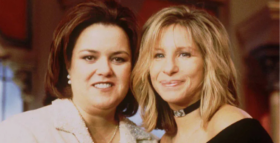
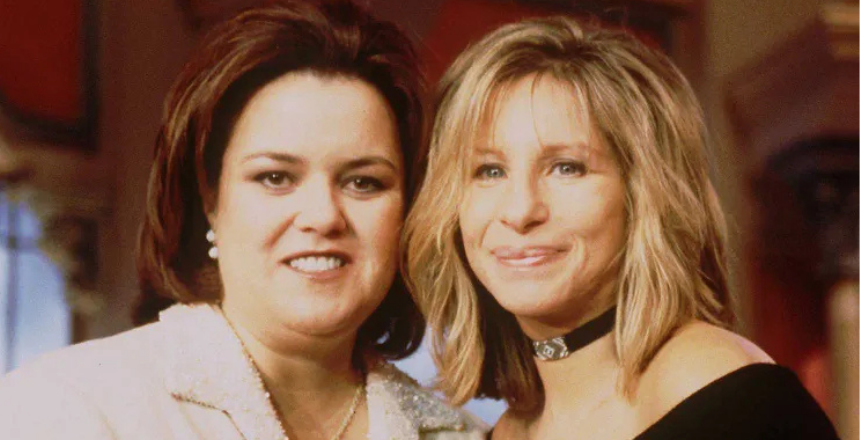
Rosie O’Donnell and Barbra Streisand in 1997 (Credit: Warner Bros.)
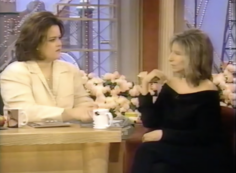
“You were a constant source of light in an often dark childhood,” Rosie O’Donnell said to Barbra Streisand through tears in 1997, just after Barbra sat in the guest’s seat on Rosie’s show. Rosie was referring to her mother’s death when she was just ten. From my couch in New Hampshire on that afternoon, I allowed myself to cry, which was rare even though my own mother had died two years earlier, when I was twelve.
Unlike Rosie’s mom, who had died from cancer, my mom had died by suicide after years of struggling with drinking and depression. Despite that, “often dark” didn’t quite feel like the right way to describe my childhood. A lot of people had looked after me, whether they knew about the hard times at home or not. One was my aunt Patty. She’d made a Streisand devotee out of me in the form of Funny Girl screenings and A Star Is Born sing-alongs. A source of light, indeed. It felt like Rosie was speaking to Barbra for me.
With Rosie’s return to the host’s chair when she subbed in for Jimmy Kimmel this summer, I found myself transported back to those 90’s afternoons, when I was in 8th and 9th grade and she kept me company after school. Patty, the same aunt who’d brought Barbra into my life, told me excitedly about Rosie’s show soon after it premiered. Just as with Barbra, I first dove into Rosie because I wanted to like what Patty liked. But very quickly, I watched Rosie because I liked Rosie. Along with VHS recordings of The Late Show with David Letterman from the previous evening (that’s another story), she became part of my after-school routine. While I’d been drawn to Letterman for his snarky deadpan humor, Rosie was a gleeful delight, uplifting talented kids and rising stars, all while wearing her emotions on her sleeve, whether she was swooning over Tom Cruise, advocating for a cause she cared about, or weeping in Barbra’s presence.
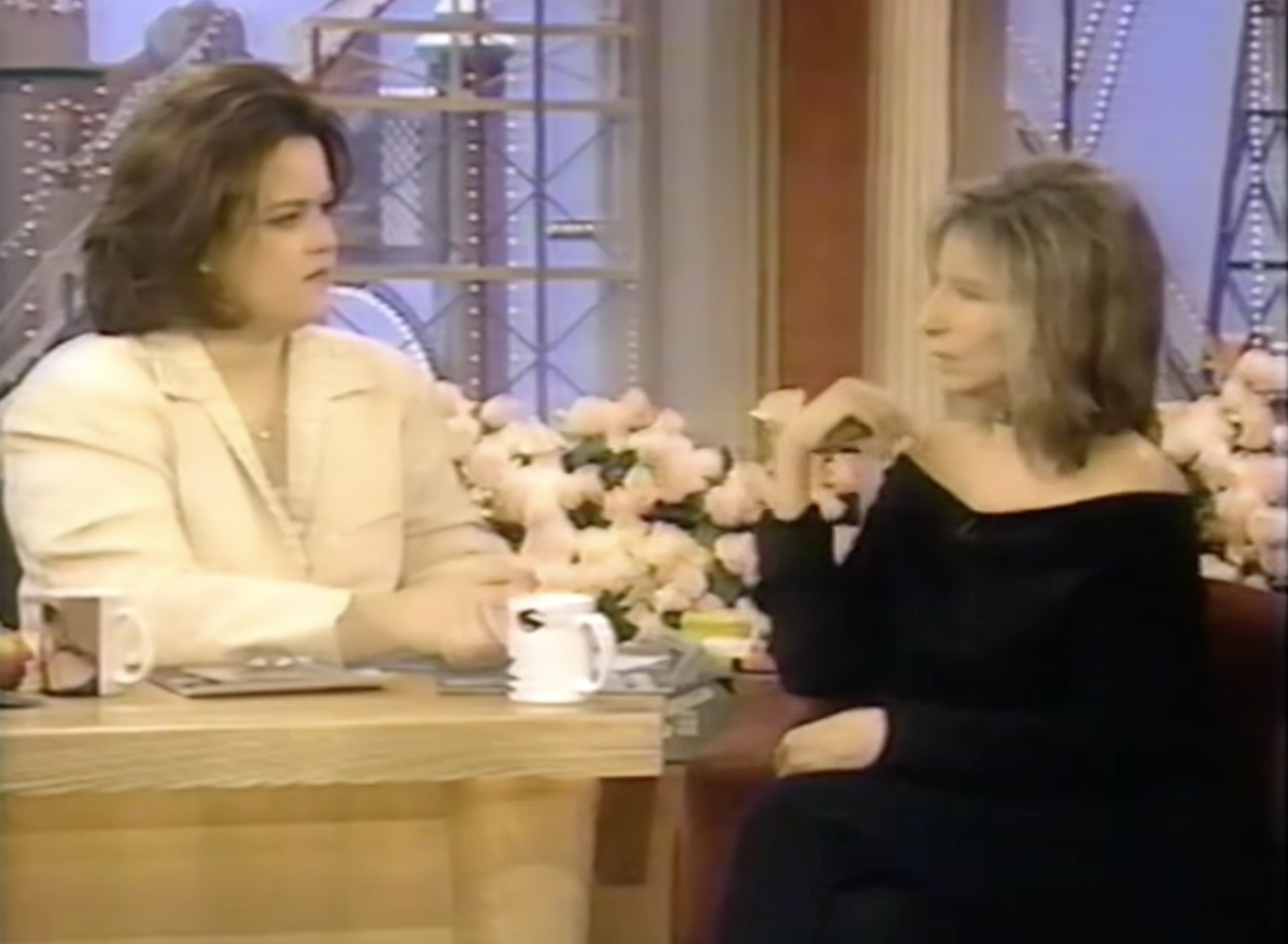
Rosie getting real with Barbra on her show, 1997
Since my own aunts were hours away in Massachusetts and Florida, Rosie became my fun TV aunt. I plopped down on the couch with Cheez-Its or Little Debbie Swiss Rolls while she showed off her Koosh ball slingshot and doled out Drake’s Cakes.
Some adults in my life were understandably concerned about me spending too much time alone after my mom died. But what I couldn’t articulate to them, or even myself, was that these afternoons were when I could decompress without having to perform for the outside world. Before my mom’s death, as I came into the understanding that the drinking and yelling that went on at my house did not happen at everyone else’s house, I convinced myself that the better I did in school, the less likely anyone would be to think anything was off at home.
Everyone – friends, friends’ parents, teachers, neighbors – was shocked when my mom died the way she did, in part because we had done a good job of keeping our family’s secrets. I was shocked too, of course – I never thought it would come to this, even with everything I’d witnessed. As time passed in the aftermath, I was eager to appear as normal and as okay as possible. Somehow, I kept my grades up, became a diligent student council member and clarinet player in the school band, and went to every middle school dance and sleepover I could.
I was trying to prove something to myself as much as to everyone else. I had briefly seen a therapist in the first year after my mom’s death, at my dad’s (very reasonable) insistence, but from the start I had been determined to persuade the therapist that I did not need to be there. About a decade would pass before I was ready to give therapy a real try. In these early years, I thought therapy would signal that I wasn’t okay. Doing well in school, seeing my friends, and relaxing in front of the TV all seemed much safer, much more normal. Of course, until I found myself weeping in front of Rosie and Barbra, overcome with the weight of everything I’d been holding in. Rosie’s tearful moment showed me that it was okay for emotions to bubble over and look a little messy. Barbra didn’t flinch; she teared up herself, then dabbed Rosie’s cheeks, then her own, with a tissue so their makeup wouldn’t smudge.
Years passed before I understood that it wasn’t only Rosie’s big emotions that moved me that day. She was also living the legacy of her loss on stage with Barbra, unafraid to show her audience that grief doesn’t end and that it’s likely that our lives’ worst moments might come back and mingle with our best ones.
This was a lesson that my mother never realized: her own father had also died by suicide when she was an adolescent. I had only heard her mention him once when I overheard an argument between her and my father, referring to why June, the month he died, was hard for her. Of course it was.
I don’t know much about my mother’s father, either about his life or about his death. What I do know is that she didn’t talk about him, and that he faced similar mental health struggles to hers. “She was a clone of him,” my aunt Patty once said to me. There’s no easy answer to what could have been done to keep either of them from doing what they did, certainly no breakthrough gleaned from Rosie O’Donnell or even Barbra Streisand. What they taught me was not about how I could have changed the past, but how I can live in the present.
I don’t host television shows. But in my own corners of the world, and in this case, the Internet, I try to emulate what Rosie taught me that day in 1997 – honor our people who aren’t here by telling their stories and by making sure they remain part of ours, even when it’s messy. We might not all have Barbra Streisand there to catch our tears. But we can build our own versions of that support in finding the people who get it, and who get us.
Jamie-Lee Josselyn is an instructor and administrator for the University of Pennsylvania’s Creative Writing Program and Kelly Writers House, and has hosted the podcast series Dead Parents Society. She is working on a memoir.