
I did not understand anticipatory grief until I felt it in my body.
It happened the first time my dad admitted he was scared. Not uncomfortable. Not worried. Scared. He said it quietly, almost like a confession, and something shifted inside me. Is this what takes me out? He asked. I recognized the moment immediately, not as a daughter, but as someone who had spent years working with families navigating decline and loss. That was when I knew the roles were reversing. From that point forward, I would be the strong one. I would carry the emotional weight, the physical logistics, the unspoken knowing.
I talk about role reversal with families all the time. I help them recognize it, normalize it, and plan for it. But standing there with my dad after his Stage IV colorectal cancer diagnosis, it was not a concept. It was visceral. My nervous system fired before I had language for it. My shoulders squared without me deciding to move them. I felt a shift from being held to holding. From receiving to containing. My body knew the roles were reversing before my mind could name it. I did not know what to say to him because, in my heart, I knew this disease would take him. He did not take care of himself. He did not have it in him to fight this kind of battle.
Everyone else told him, “No, Walt. You’re going to be fine.” I said, “It won’t take you out if you don’t want it to.”
Even as I said it, I knew I was bargaining with him, with fate, with whatever invisible force governs endings.
As his caregiving journey unfolded, my family did what families do in the face of impending loss. We spiraled. Each of us grabbed onto our own version of control. My twin sister stepped into executive mode, organizing, managing, and keeping things moving. My younger sister flew in from California and started hiding avocado in his soup because he would not eat it plain. They bought a Vitamix and made green smoothies and juices, even though he had never eaten like that a day in his life. My older sister came over simply to spend time with him. My mom said, “Let him eat what he wants. He’s a dying man.”
And then there was me.
Standing just outside the tornado, watching everyone cope in their own way, I felt almost alien in my clarity. I kept asking the same question: How do we make his life easier? I suggested hiring a maid. He refused. He insisted that his daughters come and clean instead. At the time, it felt stubborn and impractical. Looking back, I wonder if that was his strategy, choosing task-driven time over emotional vulnerability. Maybe any time with us was enough. Maybe that was his version of quality time.
I knew how this ended. I was already in the business of endings.
There were moments, though, small and human, that meant more than anything else. One day, we were at a major hospital system getting his port installed. It was an all-day affair, and the campus was non-smoking. He wanted a cigarette. I told him it was not allowed and went to get the car. When I pulled up, he leaned out the passenger window with a goofy grin on his face and said, “Meg…look.”
He pointed to the ground. There it was, a half-smoked cigarette, smooshed and smoldering. He was so proud of himself.
That is what I remember. His ridiculousness. His refusal of authority. His insistence on being his own person. His stubborn autonomy. All the traits that made him successful, and all the blind spots that held him back, coexisted in that one moment. A whole and complete human being. That smile has never left my mind. I started grieving him that day, even though he was still sitting right beside me.
When that happens, I know what’s coming. Chaos erupts. And then, after the explosion, it is over. The person dies. When it happened in our family, I knew it was a matter of weeks. Days, maybe. The universe seems to announce the end by throwing the family into emotional free fall. What I have learned is the importance of anchoring instead of unraveling.
I would be standing in my kitchen and suddenly see myself at four years old with him laughing in our driveway in Sonoma, California teaching me how to ride my bike. The flashes were not dramatic. They were bright and ordinary. The good parts. They arrived without permission, as if my body were trying to preserve him before he was gone.
There is a hallmark moment in every caregiving journey. I have seen it in every family I have helped, including my own. Toward the end, everyone starts losing it. The fighting begins. People argue with each other, with caregivers, with agencies, with nurses, with anyone within reach. Anger fills the room. It feels like a bomb has been lit.
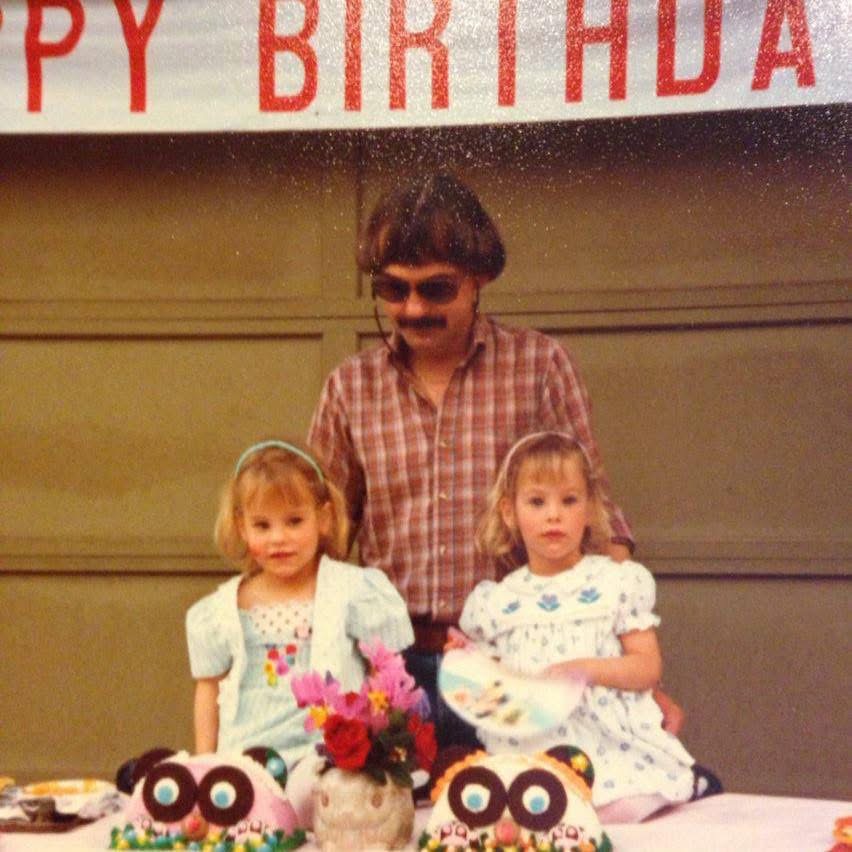
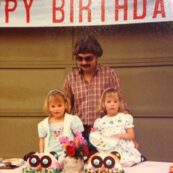
Meghan’s fourth birthday in Sonoma, CA (from left to right, Meghan, Walt Phelan, twin sister Melissa Phelan)
When that happens, I know what’s coming. Chaos erupts. And then, after the explosion, it is over. The person dies. When it happened in our family, I knew it was a matter of weeks. Days, maybe. The universe seems to announce the end by throwing the family into emotional free fall. What I have learned is the importance of anchoring instead of unraveling.
At that point, the explosions stop and the arguing quiets. But the resolution is too generous a word. Grief rearranges a family; it doesn’t restore it. We stepped into life “after him,” carrying the echoes of those final weeks. Who shut down. Who lashed out. Who held steady. None of it disappeared. It became part of the architecture of us. Information we could either ignore or use.
When I think of anticipatory grief now, what stays with me is not the fear or the anger or even the loss. It is the feeling of being with him. His smile. His personality. The things that made him him, and ultimately made me me.
Anticipatory grief did not begin when my dad died. It began when I knew he would, and loved him anyway, every day until the end.
Meghan Phelan is a healthcare entrepreneur and caregiver advocate whose work explores anticipatory grief, family dynamics, and lived experience of loss.